
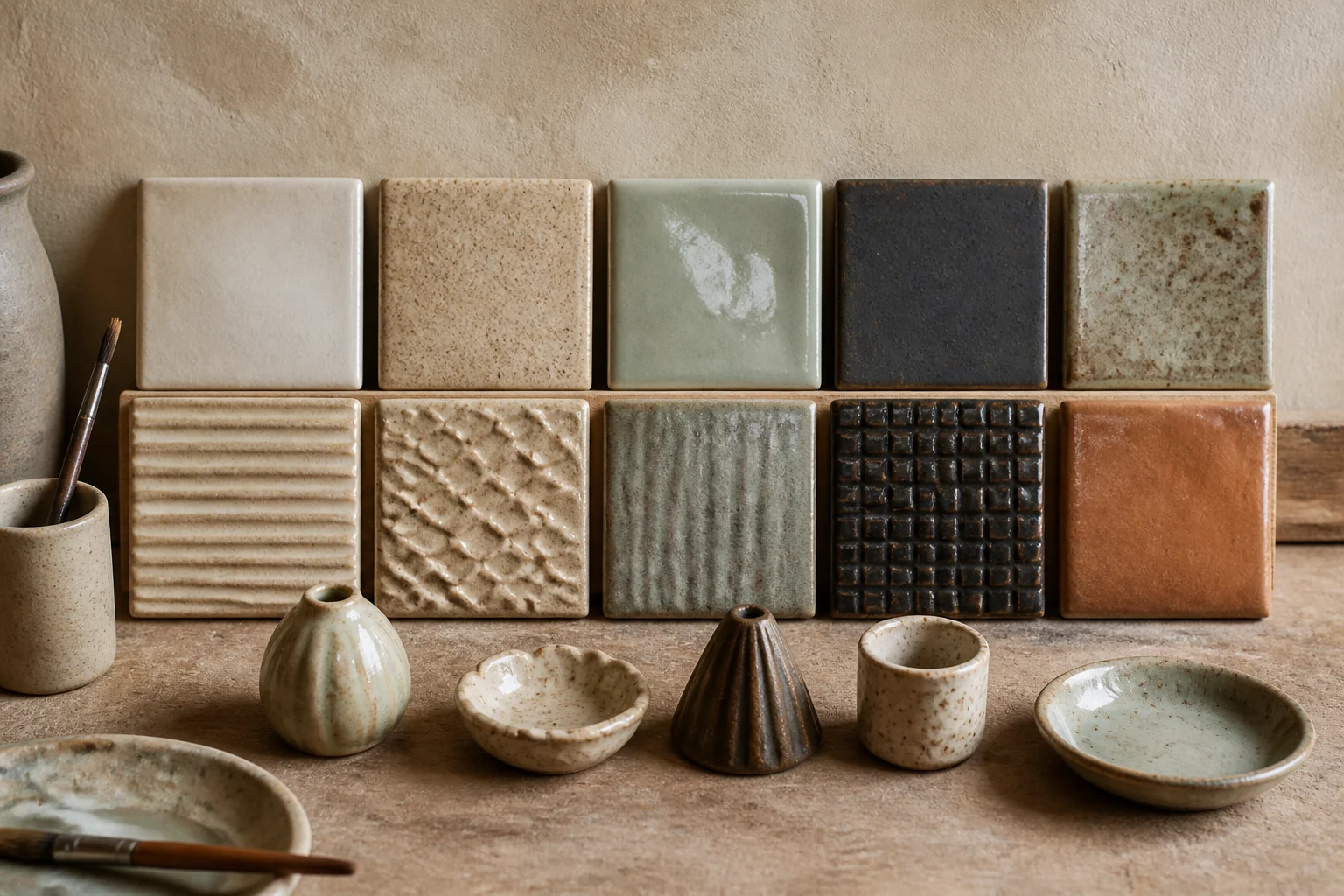
The language of the surface
Glaze is far more than the layer that gives ceramics their colour. It shapes the way light moves across the surface, the tactile experience of the piece and how it will relate to traces of use over time.
Matte surfaces reflect light more softly, while glossy glazes can make colours appear more vivid. Textured surfaces bring the handmade quality of a form forward and reveal a different expression from every angle.
Natural variations
Position in the kiln, application thickness and firing atmosphere can create subtle variations in a glaze. Unlike the uniformity of mass production, these variations form the distinctive visual memory of craft.